Skip navigation

Category Archives: Japan

I have been living in Gumyoji for nearly nine years now, which I chose for its location. Gumyoji provides access to two train stations both within five minutes walk, it is only nine minutes from Yokohama by train, my three workplaces are all within 45 minutes, and the Ooka River which is only a stone’s throw away, provides a nice walk on the rare day off and hosts a beautiful thoroughfare of cherry blossoms early in spring. There is a covered shopping arcade allowing for shopping without an umbrella and the best dentist is located here, though this final thought could embrace some of the writer’s sentiment.

While a rather nice place to live, when walking the streets of Gumyoji, there are some somewhat quaint, a little bit bizarre, and slightly outlandish sites to see.

Some interesting town planning

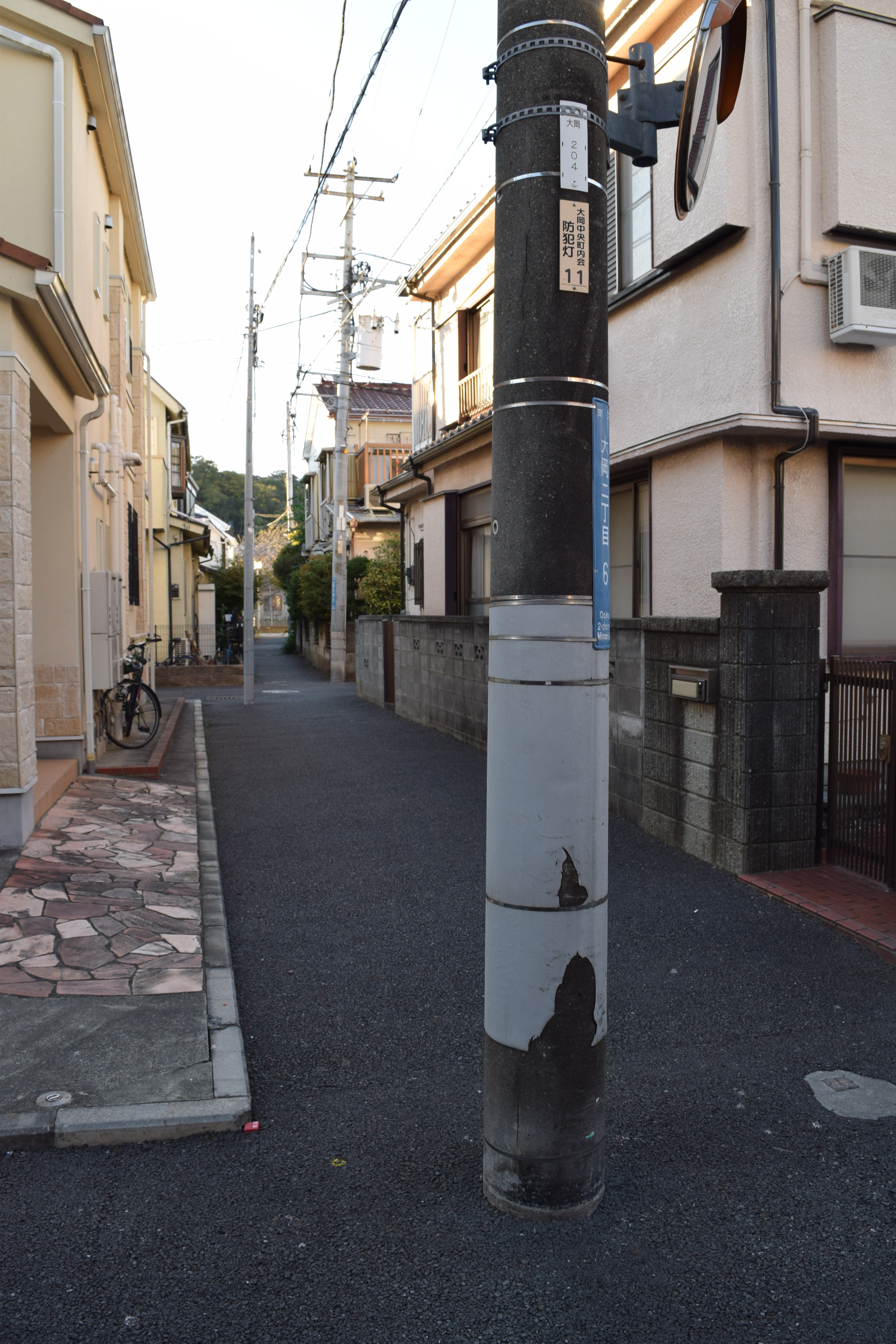
Many of the streets in Gumyoji are narrow, as is the case in many places around Japan. To widen roads, governments are embarking on a buy-back scheme where, upon sale of the land, the government buys a portion of the land facing the road to make the road wider. It seems a shame though, that the department responsible for power poles and lines cannot coordinate well with roadworks.

Plumb bob on strike?

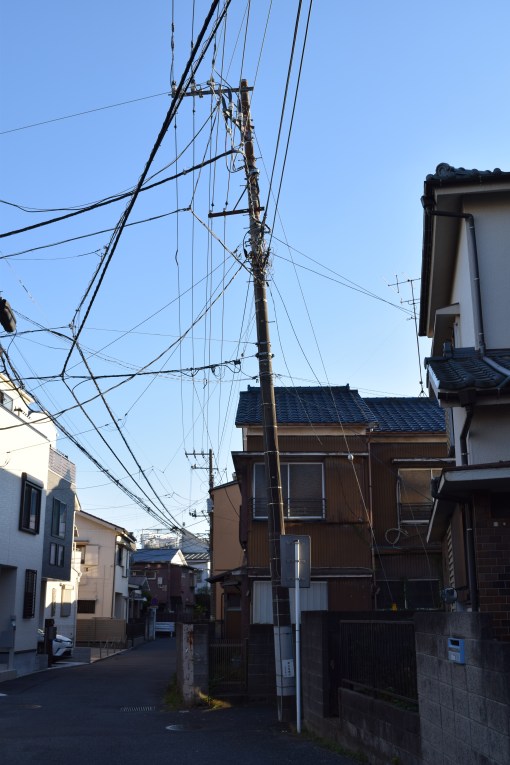
Looking up is not often a pleasurable experience due to the plethora of power lines overhead. However, rather than looking up I think we should look out.

The old and the new

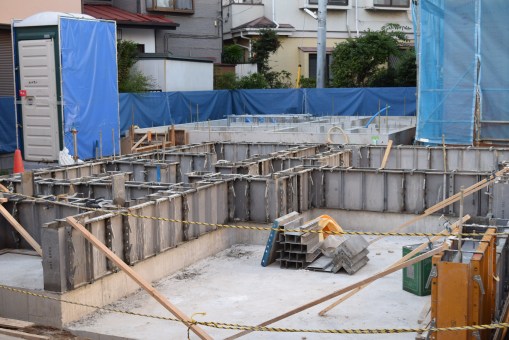
As with most communities, the older places are coming down and new houses are going up in their place. In Gumyoji though, one house is torn down to be replaced by two or three.

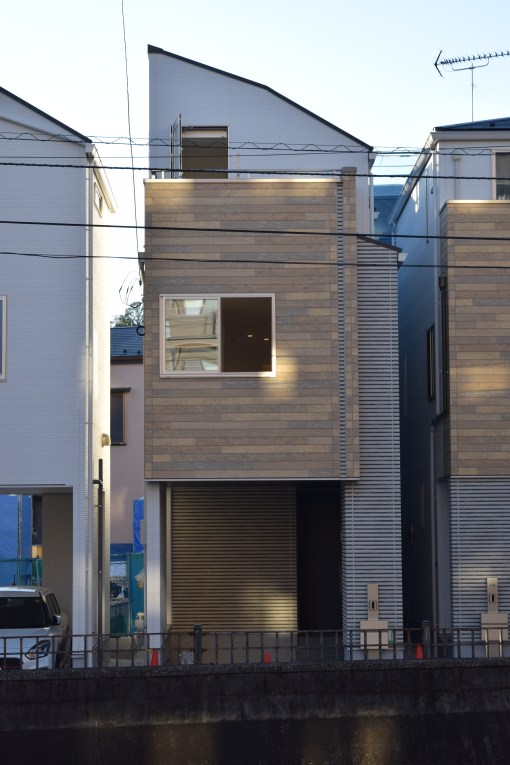
If you’re in the market for a new house, the new one above is for sale. Located on the Ooka River, it is one room wide, two rooms deep, three floors, and you have almost 50cm between the house an property boundary on all sides – enough to walk around, put an air-conditioning unit, or park a bicycle. This little beauty gets the morning sun for about two hours after the sun climbs above the seven storey apartment building opposite it on the other side of the river. All this can be yours for only ¥48,000,000, or $550,000 AUD.

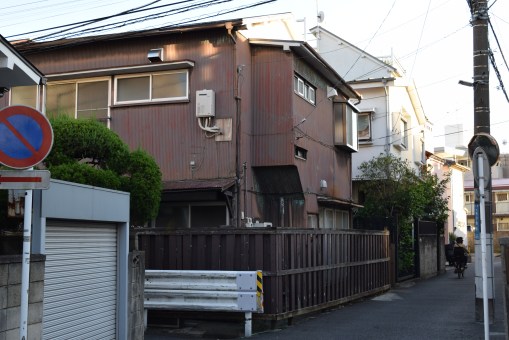
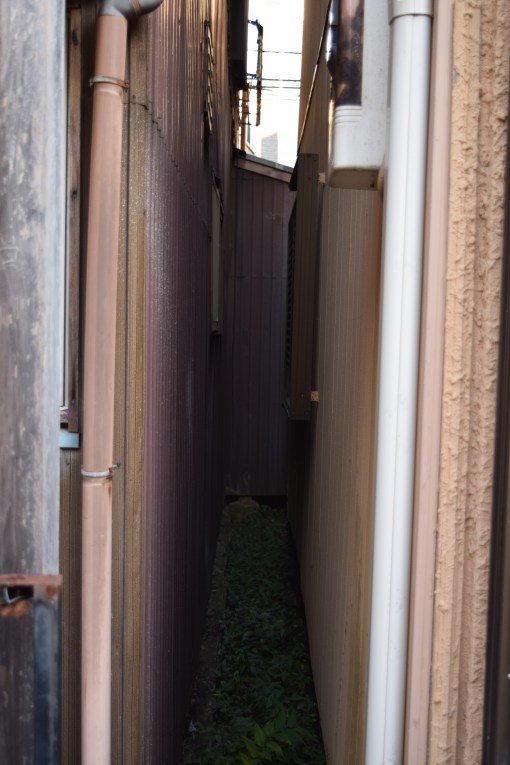
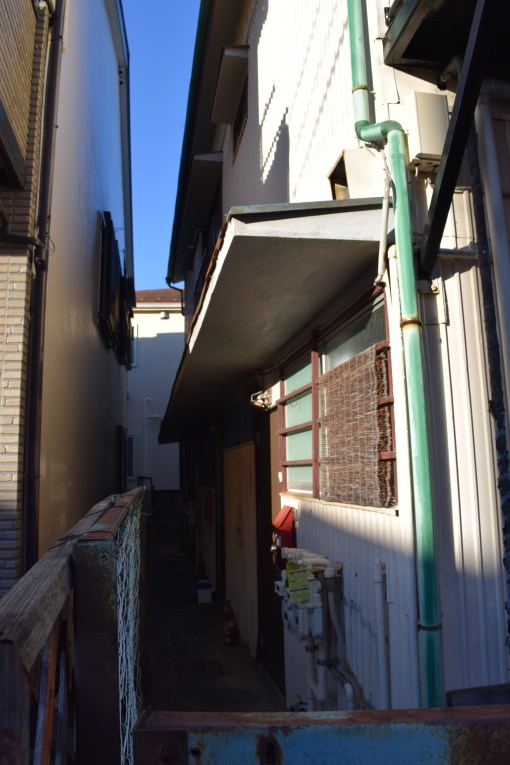
The neighbours are close

Literally

Looking to get away from the hussle and bussle of the big city, and generally just wanting to get away from it all after a very hectic summer, I decided to head off to Zenkoji Temple in Nagano City. I had heard that it was one of the major temples in Japan, a good to place to see, and it was not far from Tokyo. While making my preparations for my trip, I discovered that Matsumoto Castle was not far from Nagano City, so I decided to put it on my intinerary. At the end of August, after the summer travel peak, I headed off to Nagano Prefecture for the first time for a two-night, three-day trip.


Zenkoji Temple (Nagano City, Nagano)

It was a very quick trip from Tokyo to Nagano City, only 90 minutes on the super express, or shinkansen as it is known in Japan. My hotel was attached to station, so after checking in and relaxing for short while, I headed off to Zenkoji Temple with the Nikon in hand. I also had with me a map, in English, that I got for free from the tourist information centre inside Nagano Station.

The walk from Nagano Station to Zenkoji Temple was very simple and took about an hour at a very leisurely pace, stopping along the way to admire all the wonderful old buildings, and popping into the miriad of shops to check out their plethora of wares and souvenirs. There are an ample number of coffee shops, convenience stores, and vending machines along the way, so you do not need to worry if you leave your hotel without a bottle of water.

After a steady walk, a lot of it up a slight hill, then passing through the first and second gates, I arrived at the first main temple not overly impressed so far. But after paying the 500 yen admission fee to get into the main temple, my impression certainly changed; defintitely unique and worth the visit. The short walk underneath the temple included in the admission fee is also recommended.

To any visitor to Japan that is keen to take in a lot of temples, shrines, and castles while they are here, remember to bring slip on shoes with you. Over my three-day trip, I cannot count the number of times, and the amount of time I spent dealing with the laces on my sneakers.

Unfortunetly, photography was not allowed inside the main temple.

This slideshow requires JavaScript.

I have to add that I really did like Nagano City. The pace was relaxed and the people seemed very happy. It was nice to see people walking down the street or sitting in a coffee shop talking and laughing with their friends, rather than looking down, frowning into their smart phones.


Matsumoto Castle (Matsumoto City, Nagano)

I went to Matsumoto City from Nagano City by express train, planning for a six-hour day in Matsumoto to take in the city and Matsumoto Castle. The single trip took about 45 minutes and while there were a few tunnels along the way, the scenery from the train was breathtaking, too.

Again, the walk from the the station to my destination was not difficult, and compared to the steady uphill walk to Zenkoji Temple in Nagano City, the walk from Matsumoto Station to Matsumoto Castle was very flat. Even while stopping often along the way to take a few photos of the shine and other sites along the way, the walk was no more than 45 minutes.

Matsumoto Castle is unique in that it is black. It is very picturesque and will certainly deplete the bytes on the SD card in your camera. You are also able to take photographs inside the castle.

Admission to the main castle grounds is not free – not so expensive, but not free. For able-bodied visitors, I do recommend paying the entrance fee and going inside the castle to have a look at the small  museum and to climb to the top to have a look at the view from sixth level. The climb to the top is exactly that – a climb. The stairs are steep, narrow, uneven, and many. You will be carrying your shoes in a plastic bag in one hand, and on many staircases (in some sections more like ladders than stairs) there is a handrail on only one side, so you will need to have good balance and not suffer from vertigo. If you are more than 150 centimetres tall, you also have to watch your head a lot.

I visited Matsumoto Castle on a week day, and not during a peak tourism time. I was able to get through the castle at a pace that was set by me, but I must add that during peak times, the wait can be hours. Choose you day carefully.

I was in Matsumoto City for six hours, and this was ample time to take in the castle, pop into a few shops, have lunch, and also have time for the requisite two-shot latte to wind down.

This slideshow requires JavaScript.

Transporation and Accomodation

If there is anyone out there interested in trains, all services that I used during this trip were provied by JR East (Japan Rail). The return trip from Tokyo to Nagano City was on the shinkansen (the super express or bullet train, and between Nagano City and Matsumoto City, the Shinonoi Line.

I stayed at the Nagano Metropolitan Hotel, also owned and run by JR East. It is very conveniently attached to Nagano Station allowing for easy access, even with a lot of luggage. I highly recommend it.


As I have to work on the national holiday, Labor Thanksgiving Day of all days, I took a day off in lieu today to take a rare trip to Tokyo to get to the Australian Embassy there.  My mission, which I chose to accept, was to apply for a new passport.  My cover, to be an Australian.

Fearing the worst – the crowded trains, the packed platforms at Shinagawa Station where I had to change trains, the long walk from the station, the noise, the expense, and dealing with a government department – I hopped on a train and headed into Tokyo.  Even though I had to stand on the train getting there, I was surprised at how relatively non-abusive the perceivable misadventure was.

I was at the embassy in just over an hour, door to door.  And Tokyo turned on some nice weather for me.  In fact, I immediately wished I had brought my camera.  Tokyo Tower up close and personal, the wonderful old buildings of the Keio Univeristy Mita Campus, Kasuga Shrine, some very interesting buildings in modern architecture, and the shimmering yellow autumn leaves on the many Ginkgo or Maidenhair trees had me kicking myself for not taking the Nikon.

Having reached my destination in a time I had thought not possible, I was now 50 minutes early for my two o’clock appointment.  And, did this confuse the security staff at the entrance to embassy.  Luckily, was able to convince them that I wasn’t a terrorist.  After the check of identification, the bag search, the metal detector, and what turned out be be a nice chat (I learnt that the whole embassy shuts down until two o’clock.),  I was allowed to enter so I could sit in comfort, albeit after using their facilities.

At half past one, a very nice young woman came into the small waiting room from the secure area of the embassy and greeted me warmly.  She confirmed why I was there, took my application form and photographs, and said that she would like to check them.  She then asked if I would care to join her at the window.  A lot of yen (27,200 of them), but only three minutes later, I was on my way back to the train station to come home.  A friendly farewell greeting from the security staff at the gate on the way out and what I had thought would be a nightmarish task turned out to be a very pleasant one.

I was half way home by two o’clock, the scheduled appointment time.

Thank you to the staff at the Australian Embassy Tokyo.

It was a little perturbing to watch how Japanese media, notably the Japanese national broadcaster, NHK, presented the announcements for the Nobel Prizes this year, 2016.

The Nobel Prizes are awarded as recognition for advances in the academic, cultural, and scientific fields.  However, on the day before the announcement of the first award this year, the national broadcaster presented the Noble Prizes more like the Nobel Olympic Games, with Japan, on 25 medals, in second place behind the United States of America, and attempted to educe excitement by questioning viewers how many medals Japan might get this year.

The first award announced was in the field of Chemistry, and congratulations must go to Mr. Yoshinori Osumi for being awarded the Nobel Prize this year.  It is wonderful to see that the years of hard work and dedication he has put into his field, and the same hard work and dedication of each laureate over the years, has been rewarded and publicised.  Criticism should be awarded to the Japanese national broadcaster for its handling of the reporting of the awards.

For more than 24 hours, the Japanese television viewer was bombarded with information about Mr. Osumi, his research, his workplace, his university, his high school, his home town, his colleagues, and restaurants he has frequented.  There were interviews with his fellow researchers, other knowledgeable academics detailing the importance and application of the research, his wife, old boys from his days at university, and current students at the middle school and high school at which he was a student many years ago, who stated how much they wanted to emulate Mr. Osumi.

On the next day, the Nobel Prize for Physics was announced.  And how did the Japanese national broadcaster report this on twitter?  Not by stating who won the award for what reason, but simply that it was not won by a Japanese person.


For anyone interested in visiting the Ise Grand Shrine in Mie Prefecture, take any information you find on the internet with a pinch of salt.  Be sure to refer to many sites and cross reference information, calculate the mean, standard deviation and understand the variance well, and go with that.  You do not want to run out of time to see everything you want to see, or miss your train home.  However, do not get me wrong, spending a day walking around the Ise Grand Shrines is definitely worth it.


A day trip to the Ise Grand Shrine can be easily done from Nagoya, but you will have to accept that you will not be able to see all 125 connected shrines.  The outer shrine, Geku, and the inner shrine, Naiku, are must-sees,  and if you are interested in seeing a few more shrines over five or six hours, then maybe you can squeeze in three or four more.  As a suggestion, do see Yamatohime Shrine and Tsukiyomi Shrine.  In fact, if you are prepared to walk from shrine to shrine, rather than take a bus as most do, these two shrines lie between Geku and Naiku and so are reasonably easy to find.  The walk, including stopping at these two shrines will take you about two hours.

If you do walk, take something to drink and maybe a snack or two.  You will not find the plethora of convenience stores or vending machines that you do in and around major cities in Japan.

From Ise Station, it is a short walk to Geku.  However, Naiku, the shrine that is recommended to be seen last, is far from any station.  Allow yourself about 30 minutes to get from Naiku to a train station by bus or taxi.  More than a hour will be required if you want to walk.  If you are heading to Nagoya or Kyoto after your day at Ise Grand Shrine, make the return trip from Uji-yamada Station.  A beautiful old station building that will further deplete the bytes on the SD card in your camera.

Enter Naiku from the car park.  If you follow the main road you will miss the shopping street and the chance to buy all the goodies the family will be expecting when you get home.  This is also worth a look as it has been built in an old-Japan style; even the Family Mart (convenience store) looks like it was built hundreds of years ago. This area is fairly crowded, and even on a week day, be prepared for a short wait to get lunch.  But try the udon, the fat noodles in Ise are a little different from those found elsewhere in Japan.

Lastly, if you have done some research before you go, you will know that the Ise Grand Shrine is re-built every twenty years.  So are all the connected shrines.  Unfortunately, all shrines are built in the same design at the same time.  They do tend to all look the same.  Maybe visiting three of four is enough.


The Obon festival period in Japan is a few days, which I have often been told could be three, in the middle of August.  The festival is celebrated at different times around Japan, and in the Kanto region, which includes the major cites of Tokyo and Yokohama, the revelry occurs around 15 August, at the height of summer, during the school summer holidays.  While not an official holiday, many companies close down, and workers are usually given leave, anywhere from three to five days.

The notion that there is no defined date for Obon is surprising.  Japan is a country that can only enter and be subsequently be out the annual rainy reason in June and July, whether there is a long string of sunny and dry days or not, when the Japan Meteorological Agency says so.  The date that students are able to start wearing their summer uniform to school at the beginning of summer, or wear their winter uniform at the beginning of winter, is not actually defined by daily temperature, but by a date.  It may be 35°C outside, but because it is 30 June, not 1 July, the winter uniform has to be worn.  The start of the cherry blossom season is determined when one tree has five blossoms, not four or six, but five.  So, the somewhat undetermined timing of the Obon festivities seems to be a tad un-Japanese.

Traditionally, Obon is a Buddhist – Confucian ritual where one honours the spirits if their ancestors.  Today, it has developed into a family reunion holiday.  People return to their parents’ home, often the city, town, or village where they grew up.  Or, the holiday offers a chance just to get away, do something different; get on train, hop into the rarely-used-for-anything-else-but-to-go-to-the-supermarket car and get to the beach.  And in Japan, this combination is sadly lethal.

Over the Obon holiday this year, the three days of the Obon holiday this year, there were 105 deaths on the roads and 48 deaths by drowning.