
Skip navigation

Category Archives: General Rambling

The 2024 Paris Olympics have come and gone, and provided plenty of memorable moments. However, looking at the medal tally alone doesn’t always tell the full story. Bigger countries often seem to dominate the rankings simply because they have more athletes and resources. But what happens when we adjust the results to consider factors like population size and economic power?

So, I decided to analyze the medal counts from four different points of view:

  1. Population-Adjusted Medals: Medals relative to the population of each country.
  2. GDP-Adjusted Medals: Medals relative to each nation’s economic output.
  3. Combined Population and GDP Adjusted Medals: Balancing both population and GDP for total medals.
  4. Combined Gold Medals with Population and GDP: Focusing on gold medals only.

It was interesting to find how the rankings changed when I took these factors into account.

1. Medals per Million People (Population-Adjusted)

Formula:Medals per Million People={Total Medals/Population (in millions)}×1,000,000

When adjusted for population size, smaller countries like Australia and the Netherlands come out on top, showing that they achieved more with fewer people.

RankCountryMedals per Million People
1Australia2.04
2Netherlands2.00
3Great Britain0.97
4France0.96
5Italy0.67
6South Korea0.62
7Germany0.40
8United States0.38
9Japan0.36
10China0.065

2. Medals per Trillion USD of GDP (GDP-Adjusted)

Formula:Medals per Trillion USD of GDP=Total Medals/GDP in Trillions of USD

When adjusted for GDP, countries like the Netherlands and Australia continue to perform exceptionally well, making the most of their economic resources to attain excellence in sport.

RankCountryMedals per Trillion USD of GDP
1Netherlands34.0
2Australia33.1
3France21.3
4Great Britain20.3
5Italy19.0
6South Korea17.8
7Germany7.7
8United States4.9
9Japan9.2
10China5.0

3. Combined Population and GDP Score (Total Medals)

Formula:Combined Score=Medals per Million People/GDP in Trillions of USD

By considering both population size and GDP, we get a balanced view of which countries are truly excelling at the 2024 Olympic Games in Paris. The Netherlands and Australia once again rise to the top, followed by South Korea.

RankCountryCombined Score (Medals per Capita and GDP)
1Netherlands2,000,000
2Australia1,274,038
3South Korea341,880
4France318,408
5Italy317,460
6Great Britain307,910
7Germany51,807
8United States77,778
9Japan97,619
10China69,000

4. Combined Gold Medals Score (Population and GDP-Adjusted)

Formula:Combined Score (Gold Medals)=Gold Medals per Million People/GDP in Trillions of USD\

Finally, when we focus only on gold medals and adjust for population and GDP, the Netherlands and Australia continue to shine.

RankCountryCombined Score (Gold Medals per Capita and GDP)
1Netherlands882,353
2Australia432,692
3South Korea138,889
4Italy95,238
5France79,602
6Great Britain70,000
7Germany57,143
8United States121,212
9Japan158,730
10China10,000

Conclusion

This “just for fun” analysis gives a different perspective on Olympic success, showing that smaller countries with fewer resources can still perform exceptionally well when adjusting for population and GDP. The Netherlands and Australia are at the top in the rankings I have posted here to hint at that it’s not just about the number of medals, but how those medals are won relative to the country’s size and economic power.

I hope these tables offer an alternative view the 2024 Olympics, highlighting the achievements of countries that might otherwise be “missed” in a traditional medal count.
Why would a country like Japan, who is recording more than 5,000 new cases of Covid-19 daily, has areas of the country under “emergency” due to the ever increasing of Covid-19 cases, is running at only 20% of its Covid-19 vaccination plan, and is struggling to find hospital beds for critical patients with the virus, be prepared to put the holding of a sports event over the care and safety of its own citizens?

Indeed, why would the Japanese government and the Japanese people want to have thousands of athletes, coaches and officials who may just have Covid-19, come into the country, spead the virus and the ever increasing more dangerous varients throughout the local population, and possibly put the health system, the hospitals and the already exhausted doctors and nurses under further stress.

Why would countries like Australia, Taiwan, and Vietnam, who have almost conquered Covid-19, want to send athletes to Japan for a sporting event, and have these athletes possibly get Covid-19, be it from other athletes or from a local spectator, volunteer, bus or taxi driver, or restaurant worker, and then take the virus back to their home countries and have it spread there?

Why would countries like Brazil and India, who are struggling to cope with Covid-19, do not have enough oxygen and ventilators for those who are fighting the virus, cannot find enough space for cremation and burial of those who have lost the fight against this virus, be prepared to spend the money urgently needed on the health and well-being of thier citizens, on sending athletes to Japan for what is nothing more than non-essential sporting event?

Why would a global sporting body like the IOC put profits from broadcasting rights ahead of caring for every global citizen during the worst pandemic the world has seen for 100 years?

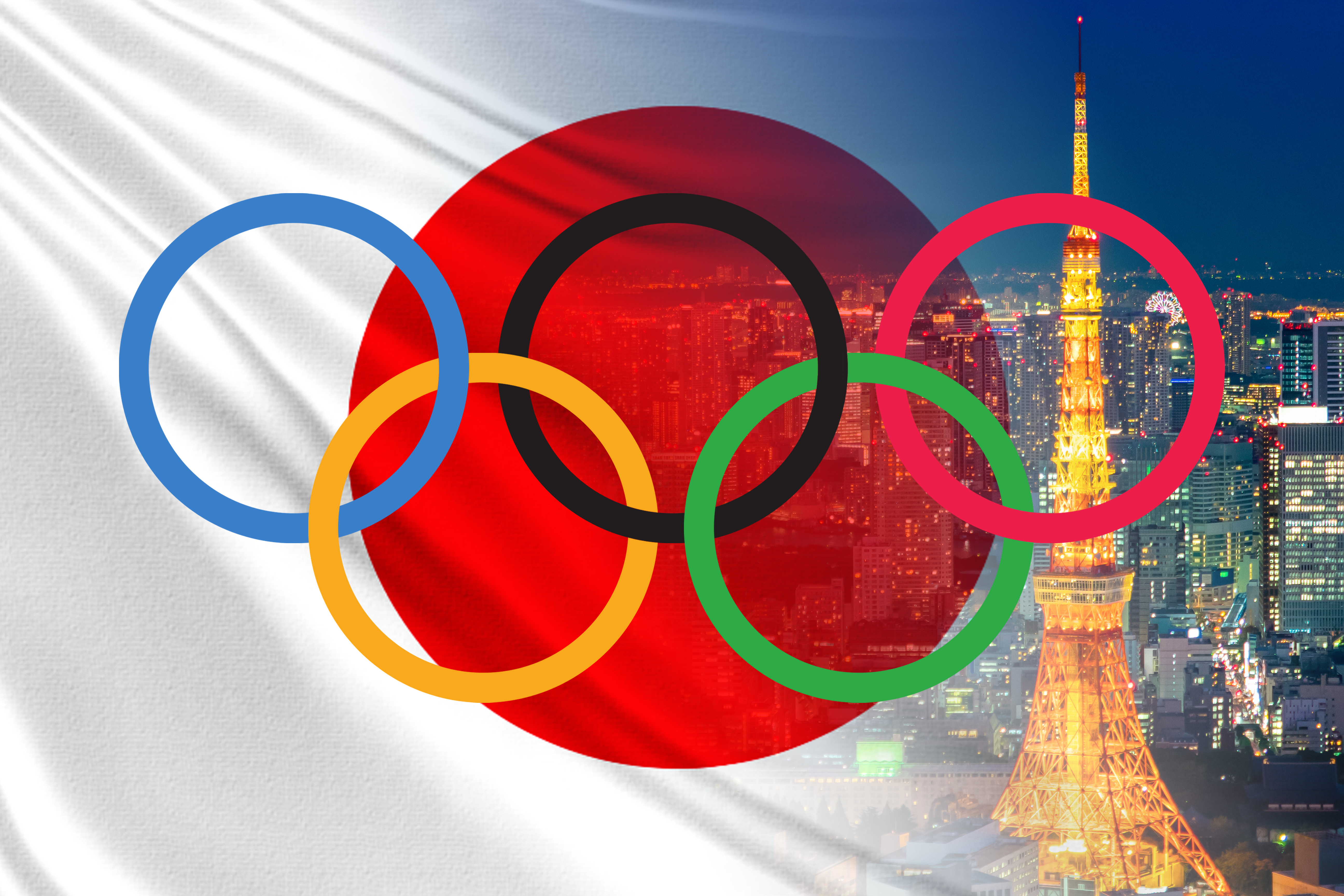
Japan. Olympics. The rings of the Olympics next to Tokyo at night. Logo of the Olympics 2020. Travel to Tokyo for the Olympic Games. Concept – tickets for the opening of the Olympic Games

© Grispb – stock-adobe CC

The Olympic Games have come and gone for another four years, and Brazil must be applauded for putting on a good show.  Many thought that it may be beyond the South American country to pull it off.  However, the first Olympic Games in the southern hemisphere outside of Australia, and the first Olympic Games in South America, should be labelled a success.  There were concerns about finance, whether the preparations would be completed in time, the Zika virus and crime, but as the sport spectacle progressed these were soon forgotten.

Tokyo has big shoes to fill in 2020.  Tokyo also has more to worry about as it prepares for its second Olympic Games.

There are many like me that believe the money that has been used so far to get the Games to Tokyo, and the money that is going to be spent in the future may have been better used.  There are  still people living in temporary housing since the Great Eastern Japan Earthquake and consequent tsunami more than five years ago.  These people could have been re-housed with the amount of money spent on the bid to have the Olympic Games in Tokyo.  The same goes for the victims of the earthquake in Kumamoto, and more recently, all those affected by the destructive typhoons that have created so much devastation over the past month.  All the reconstruction work in Fukushima and surrounding areas, and in Kumamoto is now pulling to a halt as all equipment and workers are now required in Tokyo to build what is required for Games of the xxxII Olympiad.

Other concerns for Tokyo include clearing their ‘clean’ bid.  Only Japan has investigated the questionable ‘donations’ and declared that there were no bribes.  It might be interesting to hear what an independent body may find and conclude.  The Japan Olympic Committee (JOC) now must continue work with the International Olympic Committee (IOC), a body that some say is more corrupt than FIFA – peas in pod?  Though with Japan’s freedom of the press ranking at number 72 in the world, dropping 11 positions this year to be between Tanzania and Lesotho, I feel sure that we will only hear the good news.  The doping crisis, boxing refereeing, and remembering to include a cauldron for the Olympic flame in the main stadium design, which in part will be made of wood, are some other concerns for the JOC.

After watching some events from the Olympic Games this year, and noticing some discrepancies and inequities across some sports, I feel that there may be some other issues that the JOC, and IOC, may need to address as they continue to tweak at the Olympic Games to find the best recipe for success, and try to make everyone happy.

One of the IOC’s criteria for selecting a sport to be a part of the Olympic Games is gender equity.  If so, then why is there no men’s synchronised swimming or men’s rhythmic gymnastics?  There are sports such as judo and wrestling that award two bronze medals.  Why isn’t every athlete that comes in in third and fourth place given a bronze medal?  National anthems are played at the medal ceremonies, after the game/performance is said and done.  However, I recall that the national anthems for the soccer¹ teams that fought it out for the gold medal, were played before the game/performance began, allowing the national anthem of the runner-up to be heard as well.  Do these not seem inequitable?


¹ The author is Australian, and in Australia the term football generally refers to Australian Rules Football.  I have taken the liberty to use my native jargon and refer to association football here as soccer.